
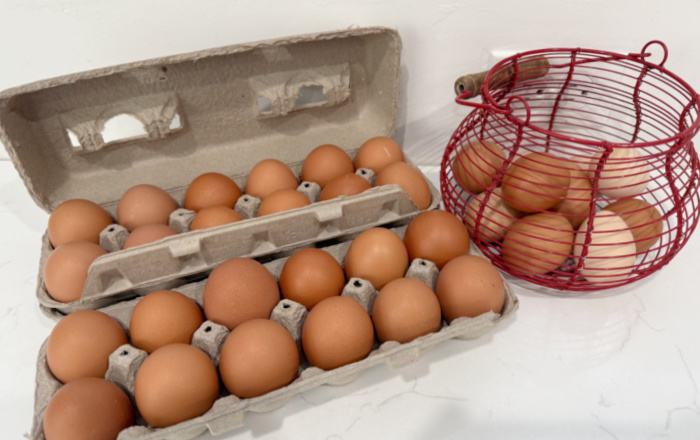
How Fresh Eggs are Different From Store- Bought Ones
This post may contain affiliate links. We may earn a commission if you purchase via our links. See the disclosure page for more info.

It’s no secret that fresh eggs happen to be one of the healthiest foods out there that you can eat. They come with many health benefits and are stuffed with protein and several important vitamins, making for a complete breakfast.
But have you ever stopped to consider the eggs that you’ve been buying from your local grocery store? You may be thinking, “Aren’t all eggs the same?” What’s the difference between store-bought eggs and fresh eggs?
Fresh Eggs vs. Store-Bought
Chances are, you’ve driven on country roads past “fresh eggs” signs at one time or another, and may have given little thought to what you were missing out on. This one may shock you, but there are several big differences that you want to know about. While looking at them, you may not be able to differentiate between the two, but appearances can be deceiving. Here’s more insight into how fresh eggs are different from store-bought ones.
You Can See the Treatment of the Chickens
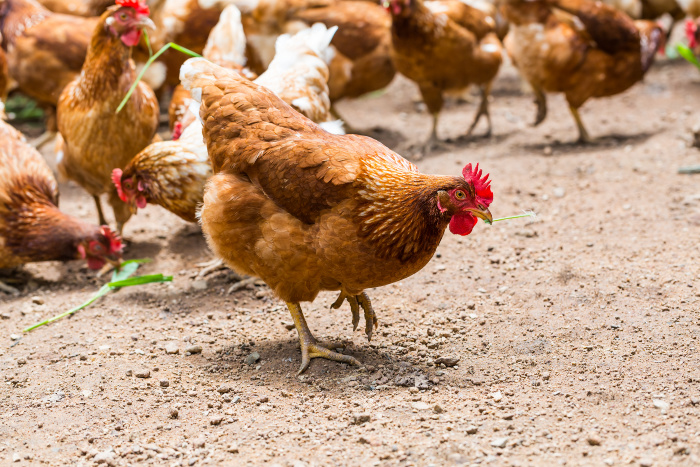
One of the biggest differences between farm-fresh eggs and store-bought ones is how the farmers treat their chickens. When you head up that farmer’s driveway, if you notice chickens out in the open pecking at the ground, you’re buying the right kind of eggs. That’s because these chickens can eat bugs for protein, along with greens, while doing all the work out in the yard.
Most store-bought eggs come from chickens with far different living conditions. These birds are kept in tiny cages, sitting in their poop while being fed pellets. Basically, they can’t live as chickens should. Which means they get very little exercise and aren’t as healthy as free-range chickens.
Maybe animal treatment isn’t that big of a concern to you, and you’re certainly entitled to your opinion. But stop and ponder the idea of eating an egg from a chicken that’s possibly unhealthy. That doesn’t sound appealing, does it? It’s a no-brainer that you want to eat an egg from a chicken that is getting plenty of exercise and lots of protein. That’s exactly what you get when you buy farm-fresh eggs.
Longer Shelf Life
Wouldn’t you prefer to buy an egg that’s not only fresher but also one you have a fairly good idea of when it was laid? For crying out loud, who wouldn’t? It’s been proven that the longer you wait to eat an egg, the fewer nutrients it contains.
Farm fresh eggs are generally only a day or two old, while the ones you pick out at the grocery store may already be well over a month old. Typically, several days pass before the eggs reach the grocery store, and then they’re given a month before their sell-by date. That’s a huge difference in freshness and quality!
Fresh Eggs Differ In Flavor
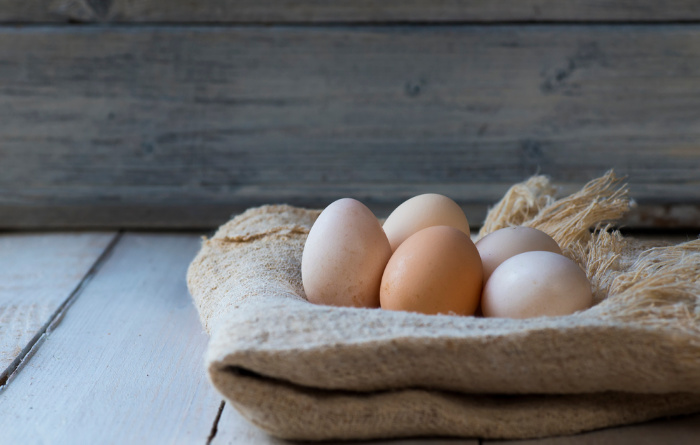
Some people will argue that there’s no difference in taste, while others say that farm-fresh eggs simply taste better. Maybe it’s just the comfort of knowing where your egg is coming from that makes them taste better?
Whatever you decide, you’ll certainly notice a difference in texture between the two. The texture of store-bought eggs is far runnier, and the yolk breaks more easily than that of fresh eggs. For those of you who prefer their eggs cooked over easy, fresh eggs are the way to go. The same holds true for the differences in the color of the yolk. Farm-fresh eggs have a darker yellow appearance than those that are bought from the store.
Fresh Eggs Have Different Nutritional Value
This one might surprise you, but farm-fresh eggs have a different nutritional value than eggs that are bought from the grocery store. They’ve been found to contain less cholesterol and saturated fats and have a higher percentage of Vitamins A, D, and E, along with omega-3’s. In other words, they contain less of the bad stuff and more of the things that you need.
Now you may wonder why that is, and it’s like we’ve been saying. Fresh eggs are usually laid by a hen that can run around, peck for insects, and get plenty of exercise, while eggs from the store are far more likely to come from hens that were cooped up in cages. Think about how healthy you would be, being cooped up all day and being fed unnatural food. It’s like this: the healthier the bird, the healthier the eggs that they produce.
Baking Comparisons
Even if you don’t notice a difference in flavor between the two, there is certainly a difference in how they bake. A farm-fresh egg not only provides more nutrients but also gives baked goods a better structure, helping them hold together better. Fresh eggs are also noticeably creamier.
Food Safety
Not that long ago, there was a major Salmonella outbreak among chicken houses of some of the largest egg suppliers in the country. This was caused by poor living conditions, and what they were eating wasn’t what chickens are meant to eat. Many people were even afraid to buy eggs for a while. Unfortunately, you can’t really tell when chickens are affected by it, which only allows it to spread more easily.
In the meantime, these egg suppliers haven’t done a whole lot to fix these conditions, and it’s only a matter of time before another Salmonella scare happens again. By choosing to buy locally, you’re greatly reducing the chances of your eggs containing salmonella, because these eggs are usually from free-range chickens.
How Fresh Eggs Are Different From Store-Bought Ones
If you have ever cracked open a farm-fresh egg next to one from the grocery store, you already know something is different. The yolk stands taller and glows a deeper shade of orange. The white holds its shape instead of spreading thin. And the flavor? There is simply no comparison. But beyond what you can see and taste, fresh eggs and store-bought eggs are genuinely different when it comes to your health.
This guide breaks down everything families need to know about what sets fresh eggs apart, why those differences matter, and how to make the most of them in your kitchen.
What Makes an Egg “Fresh”?
A fresh egg typically comes from a small local farm, a backyard flock, or a farmer’s market. These eggs are usually collected daily or every few days and often reach your hands within a week of being laid. Store-bought eggs, on the other hand, can legally be sold up to 45 days after being washed and graded, and they may sit in a warehouse or on a shelf for additional weeks before you pick them up. That timeline matters more than most people realize.
The Nutritional Differences Between Fresh and Store-Bought Eggs
One of the most-cited studies on egg nutrition comes from Mother Earth News, which tested eggs from pastured hens and compared them with the USDA’s nutritional data for commercial eggs. The results showed meaningful differences that hold up across multiple research efforts.
Fresh eggs from hens that roam and forage tend to contain more vitamin E, which supports immune function and acts as an antioxidant in the body. They also tend to have higher levels of vitamin A, which is important for eye health, skin health, and a strong immune system.
Omega-3 Fatty Acid
Perhaps most notable is the omega-3 fatty acid content. Pasture-raised hens that eat a varied diet of grass, bugs, and seeds produce eggs with significantly higher omega-3 levels than hens raised in confined operations and fed grain only. Omega-3 fatty acids are linked to heart health, brain development in children, and reduced inflammation throughout the body.
Fresh eggs have also been found to contain higher levels of beta-carotene, the same antioxidant found in carrots and sweet potatoes. This is what gives the yolk that rich, vibrant orange color. The more deeply colored the yolk, the more beta-carotene and other antioxidants it is likely to contain.
Lower Cholesterol and Better Fats
Research has found that eggs from pasture-raised hens can have a more favorable ratio of omega-3 to omega-6 fatty acids. Most people in Western diets already consume far too many omega-6 fatty acids and not enough omega-3s, so a better ratio in your eggs can be a simple, everyday way to bring things back into balance.
Some studies have also found that fresh eggs from well-fed hens have lower total cholesterol than conventional eggs. While dietary cholesterol is no longer the major concern it once was, it’s still worth noting that high-quality feed and access to pasture appear to produce nutritionally superior eggs in multiple ways.
Food Safety and Freshness
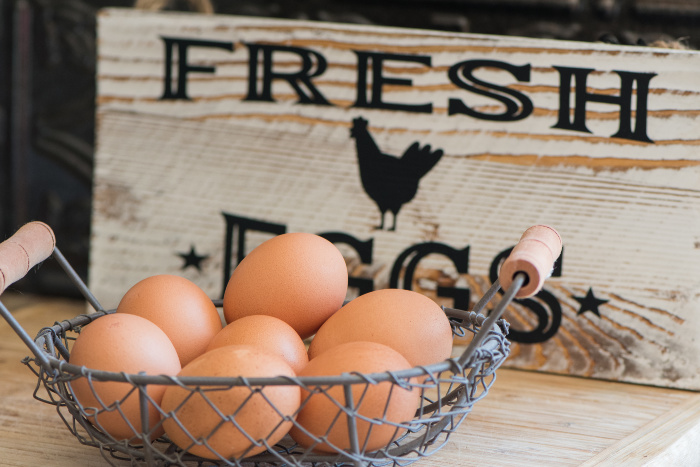
One practical difference that matters to families is food safety. Fresh eggs are often unwashed and still have their natural bloom, a thin protective coating called the cuticle that seals the pores in the shell and prevents bacteria from entering. Commercial eggs are washed before sale, which removes this coating and requires refrigeration to compensate for it.
A fresh, unwashed egg can actually be stored at room temperature for several weeks without spoiling. Once washed, eggs must be refrigerated. This is why you’ll see eggs sitting out on counters in many European countries, while in the United States, store-bought eggs must stay cold.
The freshness itself also plays a role in how eggs cook and behave. Fresh eggs poach beautifully because the white is thick and cohesive. They’re better for frying for the same reason. Interestingly, older eggs peel more easily after hard-boiling because the air pocket inside grows as the egg ages, making the shell easier to remove.
What to Look for When Buying Fresh Eggs
Not every egg labeled “natural” or “cage-free” at the grocery store is the same as a truly fresh, farm-direct egg. Here are some things to look for. Look for eggs from local farms, farmers’ markets, or neighbors with backyard chickens. Ask how old the eggs are and how the hens are raised. Pasture-raised means the hens have outdoor access and room to forage, which is the single biggest driver of nutritional quality. Hens that eat grass, worms, and insects produce eggs with the most diverse nutrient profile.
The color of the yolk is a quick and useful indicator. A pale yellow yolk suggests a grain-fed hen with limited outdoor access. A deep orange yolk suggests a hen that has been eating a varied, natural diet.
A Word on Backyard Chickens
Many families across the country are discovering the joys of keeping a small flock of backyard chickens. Even three or four hens can supply a family with more eggs than they can eat. The eggs are as fresh as you can find, and children love the connection to where their food comes from.
If you have the outdoor space and local ordinances permit it, a small backyard flock is one of the most rewarding ways to ensure your family has access to truly fresh eggs year-round.
The Bottom Line
Fresh eggs aren’t just tastier than store-bought eggs. They are, in many measurable ways, more nutritious. Higher levels of vitamins A and E, higher levels of omega-3 fatty acids, more antioxidants, and a natural protective coating that keeps bacteria out are all meaningful advantages.
For families looking for simple, everyday ways to improve their nutrition, switching to fresh eggs from a local source is one of the easiest and most delicious steps you can take. The next time you see a farm stand or a neighbor selling eggs, it’s worth stopping. Your breakfast, and your body, will thank you.
Frequently Asked Questions About Fresh Eggs
How long do fresh eggs last?
An unwashed fresh egg stored at room temperature can last two to four weeks. A washed fresh egg stored in the refrigerator will stay good for about six to eight weeks.
Can you tell if an egg is fresh without cracking it?
Yes. Place the egg in a bowl of cold water. A fresh egg sinks and lies flat on its side. A week-old egg stands upright on the bottom. An egg that floats is too old to eat.
Are brown eggs healthier than white eggs?
No. Shell color is determined by the hen’s breed and doesn’t affect nutrition. What matters is how the hen was raised and what she ate.
Are eggs from backyard chickens safe to eat?
Yes, as long as basic hygiene practices are followed. Collect eggs regularly, store them properly, and wash your hands after handling. Eggs from healthy, well-cared-for hens are very safe to eat.
Do fresh eggs taste different?
Most people find that fresh eggs have a richer, creamier flavor than store-bought eggs. The difference is especially noticeable in simple preparations like scrambled eggs, fried eggs, or baked goods, where the egg flavor is front and center.
How to Freeze Eggs: Everything You Need to Know
Raising Quail: What You Need to Know
Final Word
The next time you head to the grocery store and stop by the egg section, we hope you have a better understanding of what you’re getting. Why not support farmers who treat their animals well and produce eggs with greater nutritional value?
Did any of this information surprise you about fresh eggs vs. store-bought ones? If you’ve tried both, won’t you tell us what you think and why you’d choose one over the other? Stay well, stay safe. May God bless this world, Linda
Copyright Images: Eggs Fresh AdobeStock_200973553 by nsc_photography, Chickens Cage-Free AdobeStock_67710633 by Teptong, Eggs on muslin Depositphotos_83339030_s-2019












Thanks for this article. We moved away from our small farm a year ago and had to leave behind our lovely gals. Their eggs were the best. Still looking for a local farm to buy eggs. I don’t know why, but store-bought eggs make me sick. Seems I’m ok if they are in something like baked goods, but to just eat store-bought eggs I get a stomach ache every time. Country eggs don’t do that to me. Many years ago, I watched a TV program (60 minutes or 20/20 – something like that) and the headline was “Why is America getting sick on eggs” (If I remember correctly.) Now, I’m old, and I can’t remember why, but I do remember watching the program and thinking to myself “That’s why! I get sick on store-bought eggs.” Ah, well. Thanks again for the information.
Hi Charlene, now I wish 60 minutes or 20/20 would have another show on Fresh eggs. People need to hear about how the chickens are fed and raised. Great comment to let the rest of us know!! Thank you, Linda
Hi Linda. First, my wife & I want to thank you from the heart for all your articles. We have learned so very much! Re: eggs – We can’t have chickens where we live & no one close has any chickens either so, how could we possible get the fresh eggs you mention? We are retired now & not able to travel very far. Sincerely,
Jake & Sylvia
HI Jake and Sylvia, it depends on where you live as far as getting fresh eggs. Hopefully, you won’t have to travel far as many people are raising chickens. I wonder if you could call your county offices and see if they have a Farmers market in your city. Once you find out who sells them you may be able to get them year-round. Let’s see if any readers have more ideas. So many people raise chickens and sell them. Oh, what about a local butcher? They may know someone who raises cows, goats, pigs, and chickens. Good luck and thank you so much for your kind words they mean so much to me. Linda
Linda, thanks for suggestion. We’ll try to get ahold of our County offices to ask them about fresh eggs.
Jake and Sylvia –
You might check into CSAs (Community Supported Agriculture). If you look up localharvest.org, you can search to find one near you. I know that some in my area will deliver if you don’t have the ability to go to the farm to pick up your box. Some in my area include fresh eggs, veggies, fruits, and meat as well as flowers. Also, check into local farmer’s markets.
Dear Leanne, many thanks for your response. We will check the site you recommended & also inquire about a Farmers Market. Really appreciate your help!
Jake & Sylvia, this is what I love people share tips!! Good luck! Linda
I grew up with chickens, I loved farm eggs. A lady at my church in the summer time gives
eggs away and I take what she wants to give me. I keep them to eat and use store bought ones to cook with.
When I first started working for the University we would gather in the sitting area of the
food service area and they served breakfast. I remember sitting there and people were eating the
eggs and it smelled like the sewer. These people didn’t know the difference but it made me sick.
Like you said it is the feed and the running free outside. People in todays world calls them free range or organic but they are good old farm fresh eggs
Hi June, wow, that’s interesting to hear the eggs smelled like a sewer, yikes!! Yes, indeed they are good old farm eggs. Thank goodness people still raise chickens for farm-fresh eggs!! P.S. I’m thawing some zucchini to make your zucchini cake recipe!! I can’t wait!!! It will be on the blog soon, my friend! Thanks again for the recipe! Linda
Forgot to mention that somewhere I have my moms recipe for creamed eggs. They are good and I’m sure it was a recipe from when she grew up on the farm during the depression.
Hi June, if you find it I will post it on the blog. Thank you!! Linda
My girls live in a chicken tractor that I move every few days to protect them. They want for nothing lol. Fresh eggs and teaching the grandkids are just some of the benefits.
Hi Matt, What a great skill you are teaching the grandkids!!! I love this comment! Linda
I read somewhere that fresh eggs can be stored on the counter as long as you don’t wash them. Do you know if this is true? What about grocery store eggs that are already refrigerated? This would be handy if the electricity went out.
Hi Kay, I have seen that as well. I can’t do it. I think I’m old-school and they have to go to the frig. I’m such a bacteria freak if there is such a thing. All eggs go in my frig. Right or wrong, that’s how I roll. Linda
As long as the eggs are not washed, they still have a protective coating on them. They are OK on the counter as long as your kitchen isn’t real hot! I have kept fresh eggs on the counter for up to a week and they were fine. Store eggs are washed (cause who wants to see bird poo all over store bought eggs??) and that removes the protective coating.
If you google “how to tell if an egg is fresh” you will find a technique for testing eggs.
Hi Leanne, I’m glad to hear this if anyone would know YOU would, thank you, my friend! Linda
i don’t have electric and i keep eggs on a shelf. they never seam to go bad. if you want to keep them long term water glass them. good for when the power goes out also. go to timbercreekfarm.com and look at there post.
Hi Pete, thank you! I know Janet from Timbercreek, I will go check it out! Thank you so much! Linda
Somehow I’m getting the impression your discussion today is on the difference in free range eggs and cage eggs. Granted caged eggs are a mass produced product, that free range eggs can never match in quantity. But, take care with free range eggs they can easily be fertilized and unsafe to eat. Unless your country enough to understand this concept, you may well unknowingly endanger your family.
Hi Beth, you know I think what I’m trying to convey is check out where you are getting your eggs. And for that matter, where the meat you are buying is coming from. The list goes on and on. So many people (like my husband) think if you buy it from farmers or the grocery store it’s safe to eat. We must educate ourselves one step at a time on everything we put in our mouths. I was at a Farmers Market here in Southern Utah and one group was selling strawberries from Mexico. We assumed we were going to a local Farmers Market and in most cases we were. Great comment, Linda
My daughter and son-in-law live in Seattle and have a small chicken coop with 7 or 8 hens. They cannot have roosters due to the noise they make but like my daughter says, they don’t want to hatch their own chicks anyway! She routinely gets enough eggs from her hens to feed her family of 6 (spring, summer and fall) and in the winter she has to purchase more eggs as the girls stop laying as many! She grows certain herbs and greens in a garden patch near her hen house and lets them out daily to forage in the back yard. That is not truly free range but much better than the alternatives.
About 30 miles from where I live there is a large egg producing company and I have driven by their place of business. Not sure how many acres they have or how big their business is but I have seen the hens out in fields free ranging there. I will purchase some eggs grown by this business because of the way I have seen the hens. I also am close enough to many farms so I do have access to farm raised produce/eggs/milk/meat.
I was raised on a farm where we raised and butchered our own meat, raised chickens for eggs and meat, and a huge garden. We were pretty self-sufficient. Knowing where my food comes from is important to me. I do try to utilize the farmer’s markets around as much as my budget allows but sometimes the organic farm fresh is more expensive than my pocketbook can handle. When that happens, I always have to change my mindset knowing that a carrot doesn’t always taste like a carrot should and neither do eggs! This year, I plan to find someone (a neighbor) who will go in with me on a 1/2 box of CSA produce. One I have in mind includes farm fresh eggs as well as produce and meat. Hope this works out for me.
Hi Leanne, that would be so awesome to share a box with someone. I love hearing your thoughts because you were raised on a farm. That is so awesome to hear from you and your experiences. I love hearing your daughter is raising chickens! Love it! Linda
Linda –
I have been incapacitated for the last 6 weeks, having had shoulder surgery on my right shoulder! Couldn’t type worth a ****!! I read all of your posts but just couldn’t handle typing a response! So, now I am BACK!
As always, I love reading and responding to your posts. You have great insights. I also love reading everyone’s comments.
Hi Leanne, WHAT???? Oh my gosh, girlfriend!! I love your comments!! You had shoulder surgery?? Oh my gosh!! I’m glad you’re back!! Hugs, Linda
We don’t have space for chickens, but I love being able to get farm fresh eggs from friends. My last supplier doesn’t have chickens any more, so I’ve been buying cage-free eggs from the store. I really need to find a new supplier!
Hi Cindy, I hope some readers will comment and tell us where we can find some fresh eggs. I have options where I live but not everyone is so lucky. Fingers crossed we get tips! Linda
Readers ~
Check out localharvest.org for CSAs (Community Supported Agriculture). They typically sell shares of their produce/eggs/meat (not all do all things though). If you are not interested in purchasing a share that they sell, the farmers might be able to tell you where to purchase individual things like eggs or fresh produce without a weekly commitment.
Hi Leanne, thank you, my friend! I love this! Linda
I grew up on a farm and loved our fresh eggs but now I work too much and cannot tend to chickens and our yard is not big enough sadly. The best eggs are “pasture raised organic” as that means they are outside all day long not just for a short period like free range eggs. Organic self explanatory. Our local butcher sells them but if you are willing to pay a little more you can also find them at the grocery store but they will not be as fresh as from the farmer’s market or a local farmer. The yolks are a deep rich golden color from eating a more healthy diet like I remember as a child. The shells are thicker too and don’t crack and break as easily either.
Hi Kelley, thank you so much for commenting! This will help others find some fresh eggs from a butcher, hopefully. Or from grocery store, if they have them. Thank you so much! Linda
Re. room-temperature egg storage–within reason, this is safe. However, once eggs have been refrigerated, they should stay refrigerated. Because eggshells are slightly porous, the change in temperature can result in bacteria, etc., being sucked in. Definitely a problem with factory eggs, since the “bloom” coating the egg has been removed–they are run through a bath of water, chlorine or other sanitizer, and the “soup” of poop and whatnot that’s washed off. Farm eggs usually are not washed–if the nests are clean, they usually don’t need it. (If any of our eggs have an “oops” I’ll scrape or wipe it off, and put that egg aside for quick use.) That protective “bloom” helps the eggs stay fresh longer.
Re. fertilized eggs–don’t worry, no problem with eating those, they definitely are not toxic! Just collect them every day, and don’t use any that a hen has clutched away somewhere (the chicks may already have started growing–still not toxic but a bit, ah, off-putting…) If you want to know if it’s a fertilized egg, look at the unbroken yolk–a fertilized one will have a tiny paler O on it, while an unfertilized yolk will only have a fuzzy paler spot.
Want to know exactly how old those store eggs are? Look on the carton, usually near the “best by” date. There will be an innocuous, anonymous 3-digit number somewhere, between 001 and 365 (or this year, 366). That’s the day of the year the eggs were laid and processed.
My biddies and their guardian roo haven’t had much free-ranging in recent months, unfortunately. Better confined than picked off one by one, as 9 of mine have been, by a bobcat. But they do get kitchen scraps, greens, mealworms, and the occasional cabbage to peck!
Hi Rhonda, wow! Thank you for sharing this information! I love it and so will my readers! I love it! Linda